
No quotes are currently available.
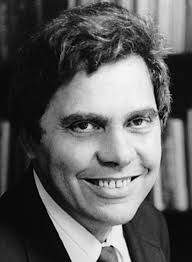
Neil Postman

Neil Postman

sociologist, essayist, pedagogue, media critic, writer, university teacher, communication scholar, journalist

Read on Wikipedia

1931  – 2003

Neil Postman was an American author, educator, media theorist and cultural critic, who eschewed digital technology, including personal computers and mobile devices, and was critical of the use of personal computers in schools. He is best known for twenty books regarding technology and education, including Teaching as a Subversive Activity (1970), The Disappearance of Childhood (1982), Amusing Ourselves to Death (1985), Conscientious Objections (1988), Technopoly: The Surrender of Culture to Technology (1992) and The End of Education: Redefining the Value of School (1995).

All Quotes by Neil Postman

Of all things to be learned, in school or out, languaging, as I prefer to call the process, is least like a mechanical skill. It is, in fact, the most intimate, integrated, emotion-laden learning we do. At no point can we separate what we know and what we are from how our linguistic powers develop...

Neil Postman

In the field of education. I refer to the meaning of the word "basic," …the meaning given to this word by some educators is not its "real" meaning. The word "basic,"… has been assigned certain meanings in order to further an education philosophy which is thought to be both sensible and effective. ...neither you nor I are under any obligation to accept their definition of what is "basic." …In short, the definition of something is usually the starting point of a dispute, not the settlement.

Neil Postman

A reading test measures one's ability to read reading tests, and reading tests are in themselves... somewhat akin to the world of crossword puzzles or Scrabble or the game of twenty questions. Some people play these games well, and all praise is due them for their skill. But if we ask, What aspect of the world do they comprehend in doing these games well? the answer is, Only the world within the games themselves.

Neil Postman

The question, "How well does one read?" is a bad question... essentially unanswerable. A more proper question is "How well does one read poetry, or history, or science, or religion?" No one I have ever known is so brilliant as to have learned the languages of all fields of knowledge equally well. Most of us do not learn some of them at all.

Neil Postman

As one learns the language of a subject, one is also learning what the subject is. ...what we call a subject consists mostly, if not entirely, of its language. If you eliminate all the words of a subject, you have eliminated the subject.

Neil Postman

Since there is no such thing as complete knowledge of a subject, one is always working to improve one's reading, writing, etc., of a subject. As Thomas Henry Huxley said, "If a little knowledge is a dangerous thing, is there anyone who knows so much as to be out of danger?" …. The problems of learning to read or write are inexhaustible.

Neil Postman

It is precisely through one's learning about the total context in which the language of a subject is expressed that personality may be altered. If one learns how to speak history or mathematics or literary criticism, one becomes, by definition, a different person. The point to be stressed is that a subject is a situation in which and through which people conduct themselves, largely in language. You cannot learn a new form of conduct without changing yourself.

Neil Postman

Children are the living messages we send to a time we will not see. From a biological point of view it is inconceivable that any culture will forget that it needs to reproduce itself. But it is quite possible for a culture to exist without a social idea of children. Unlike infancy, childhood is a social artifact, not a biological category.

Neil Postman

The effects of technology are always unpredictable. But they are not always inevitable.

Neil Postman

Childhood is analogous to language learning. It has a biological basis but cannot be realized unless a social environment triggers and nurtures it, that is, has need of it. If a culture is dominated by a medium that requires the segregation of the young in order that they learn unnatural, specialized, and complex skills and attitudes, then childhood, in one form or another, will emerge, articulate and indispensable.

Neil Postman

What ideas are convenient to express inevitably becomes the important content of a culture.

Neil Postman

Writing freezes speech and in so doing gives birth to the grammarian, the logician, the rhetorician, the historian, the scientist -- all those who must hold language before them so that they can see what it means, where it errs, and where it is leading.

Neil Postman

But what started out as a liberating stream has turned into a deluge of chaos. ...matters have reached such proportions today that for the average person, information no longer has any relation to the solution of problems. ...The tie between information and action has been severed. ...It comes indiscriminately, directed at no one in particular, disconnected from usefulness; we are glutted with information, drowning in information, have no control over it, don't know what to do with it.

Neil Postman

We no longer have a coherent conception of ourselves, and our universe, and our relation to one another and our world. We no longer know, as the Middle Ages did, where we come from, and where we are going, or why. That is, we don't know what information is relevant, and what information is irrelevant to our lives.

Neil Postman

Through the computer, the heralds say, we will make education better, religion better, politics better, our minds better β€” best of all, ourselves better. This is, of course, nonsense, and only the young or the ignorant or the foolish could believe it.

Neil Postman

They will give us artificial intelligence, and tell us that this is the way to self-knowledge... instantaneous global communication... the way to mutual understanding... Virtual Reality... the answer to spiritual poverty. But that is only the way of the technician, the fact-mongerer, the information junkie, and the technological idiot.

Neil Postman

In a technocracy, tools play a central role in the thought-world of the culture. Everything must give way, in some degree, to their development. The social and symbolic worlds become increasingly subject to the requirements of that development. Tools are not integrated into the culture; they attack the culture. They bid to become the culture. As a consequence, tradition, social mores, myth, politics, ritual, and religion have to fight for their lives...

Neil Postman

Technological competition ignites total war, which means it is not possible to contain the effects of a new technology to a limited sphere of human activity... What we need to consider about the computer has nothing to do with its efficiency as a teaching tool. We need to know in what ways it is altering our conception of learning, and how, in conjunction with television, it undermines the old idea of school.

Neil Postman

The opposite of a correct statement is an incorrect statement. The opposite of a profound truth is another profound truth (Niels Bohr)." By this, he means that we require a larger reading of the human past, of our relations with each other, the universe and God, a retelling of our older tales to encompass many truths and to let us grow with change.

Neil Postman

TV serves us most usefully when presenting junk-entertainment; it serves us most ill when it co-opts serious modes of discourse - news, politics, science, education, commerce, religion.

Neil Postman

Think of Richard Nixon or Jimmy Carter or Billy Graham, or even Albert Einstein, and what will come to your mind is an image, a picture of face, (in Einstein's case, a photograph of a face). Of words, nothing will come to mind. This is the difference between thinking in a word-centered culture and thinking in an image-centered culture.

Neil Postman

When two human beings get together, they're co-present, there is built into it a certain responsibility we have for each other, and when people are co-present in family relationships and other relationships, that responsibility is there. You can't just turn off a person. On the Internet, you can.

Neil Postman

At its best, schooling can be about how to make a life, which is quite different from how to make a living.

Neil Postman

A definition is the start of an argument, not the end of one.

Neil Postman

The key to all fanatical beliefs is that they are self-confirming....(some beliefs are) fanatical not because they are "false", but because they are expressed in such a way that they can never be shown to be false.

Neil Postman

Someone needs to mention what may be lost. Of course, one of the problems is that what I would judge to be a negative consequence, someone else might see as a positive consequence. For example, telephones in automobiles seem to me a very bad idea. So does spending a lot of hours "communicating" on the Internet when one could use that time reading Cervantes' Don Quixote.

Neil Postman

Reflect on these questions β€” and others that these can generate. Please do not merely react to them.

Neil Postman

What can be called "consciousness of the process of abstraction." That is, consciousness of the fact that out of a virtually infinite universe of possible things to pay attention to, we abstract only certain portions, and those portions turn out to be the ones for which we have verbal labels and categories. What we abstract, i.e., "see," and how we abstract it, or see it, or see it or think about it, is for all practical purposes inseparable from how we talk about it.

Neil Postman

As technical people, we are apt to be preoccupied with scores, not competence...

Neil Postman

We do not know nearly as much as we should about how children learn language, but if there is one thing we can say with assurance it is that knowledge of grammatical nomenclature and skill in sentence-parsing have no bearing whatsoever on the process.

Neil Postman